



The UEFA Nations League is an international football competition organised by UEFA for European men’s national teams. It uses a league system in which countries compete in groups, with opportunities for promotion, relegation and progression to the knockout stage. Follow the latest competition news and international football updates throughSportPesa.
The UEFA Nations League has become an important part of the European international football calendar since its introduction in 2018. It gives national teams opportunities to play competitive matches against opponents of similar strength. The 2026/27 edition features 54 national teams across four divisions, with League A teams competing for the championship. This guide explains the competition’s format, history, participating teams, fixtures, results and standings.

Check live UEFA Nations League scores and fixtures on SportPesa Score or download the SP Score App for match statistics and results.
UEFA Nations League competition profile
The UEFA Nations League comprises European national teams competing in a structured league system. The competition is organised into divisions that allow teams to compete against opponents of similar strength while pursuing promotion or avoiding relegation. Here is an overview of the competition, including its current format, participating teams, and previous champions.
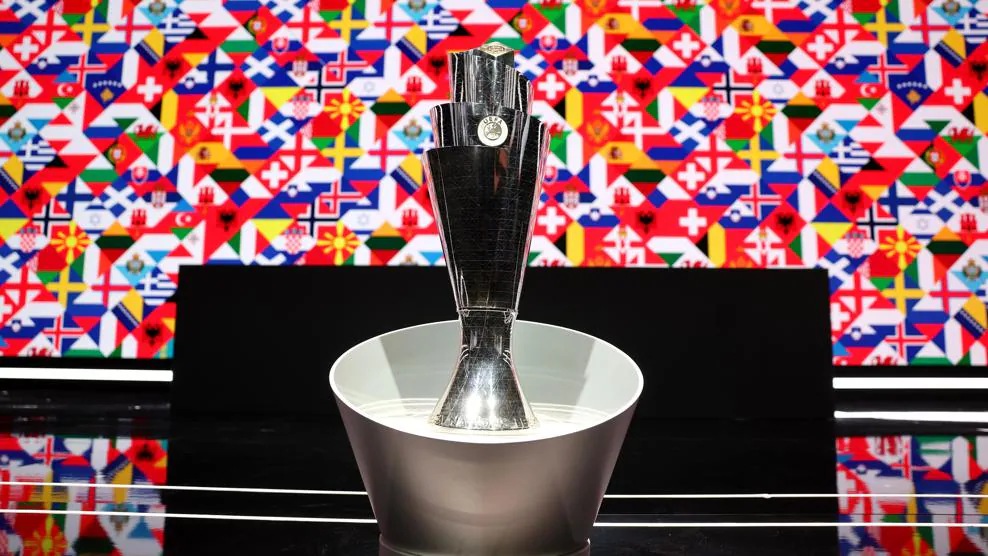
| Competition detail | Information |
| Competition name | UEFA Nations League |
| Organising body | UEFA |
| First edition | 2018/19 |
| Region | Europe |
| Participants | 54 national teams (2026/27) |
| Frequency | Every two years |
| Competition format | Group stage, promotion, relegation and knockout rounds |
| Current edition | 2026/27 |
| First champions | Portugal (2019) |
| Most successful nation | Portugal (two titles) |
What is the UEFA Nations League?
The UEFA Nations League is a tournament involving European men’s national football teams competing in a league format. It was introduced to make international matches more competitive and reduce the number of friendly fixtures played during international breaks. Teams are placed into different divisions according to the UEFA Nations League access list and compete for points within their groups. Unlike the UEFA European Championship and FIFA World Cup, the Nations League is a separate competition with its own championship and promotion and relegation arrangements. Results can also influence qualification opportunities for major international tournaments.
History of the UEFA Nations League
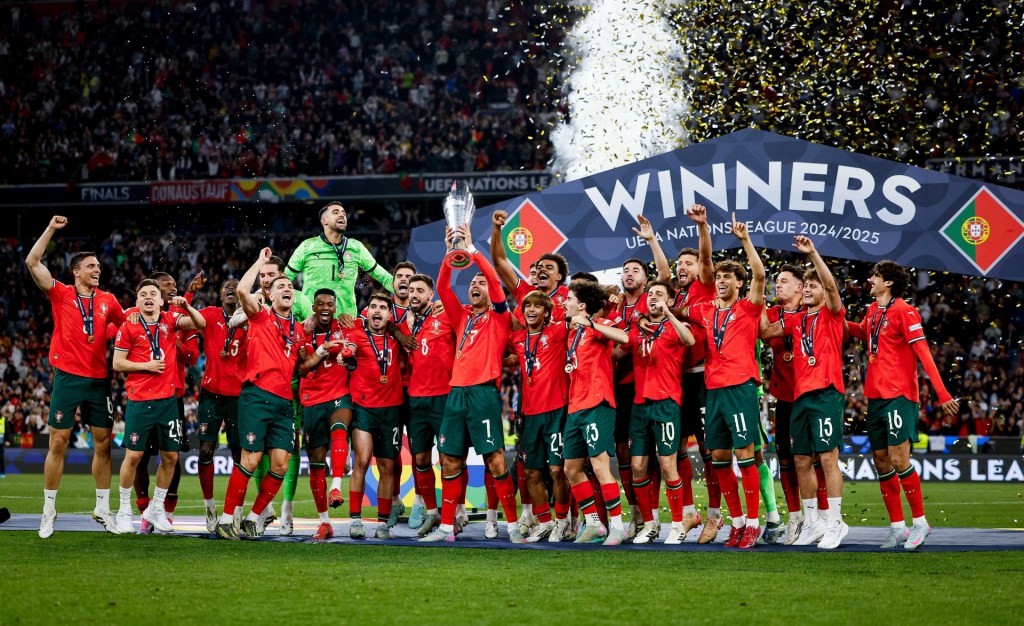
The Nations League was introduced by UEFA in 2018 to provide European national teams with more meaningful competitive fixtures. Its first edition took place during the 2018/19 season, with Portugal becoming the inaugural champions after defeating the Netherlands 1–0 in June 2019. The competition has since produced three different champions, including France and Spain, while Portugal became the first country to win two titles in 2025.
UEFA Nations League and European Championship qualification
Through the UEFA Nations League, national teams can earn an additional opportunity to qualify for the UEFA European Championship. Under the EURO 2028 qualification arrangements, certain high-ranked Nations League group winners who have not qualified through the main qualifying competition may enter the play-offs. However, qualification is not automatic, as the available play-off places depend on European qualifying results and the relevant tournament regulations. The number of final tournament places decided through play-offs also depends on how the host nations qualify.
UEFA Nations League format
The UEFA Nations League format divides participating countries into leagues based on their competition rankings and previous performances. During the group stage, teams play home-and-away matches against opponents in their groups, earning three points for a win and one for a draw. The top two teams from each League A group qualify for the quarter-finals, while other positions determine promotion, relegation or play-off participation. The four quarter-final winners advance to the final tournament to compete for the championship. Promotion and relegation arrangements differ between leagues, particularly in 2026/27 because UEFA is preparing to introduce a three-league structure in 2028/29.
UEFA Nations League groups and participating teams
There are four divisions in the 2026/27 UEFA Nations League: League A, League B, League C and League D. The competition features 54 national teams placed into groups according to the UEFA Nations League access list and previous competition results. The following table shows the confirmed groups and participating teams for the 2026/27 edition.
| League | Group | Participating teams |
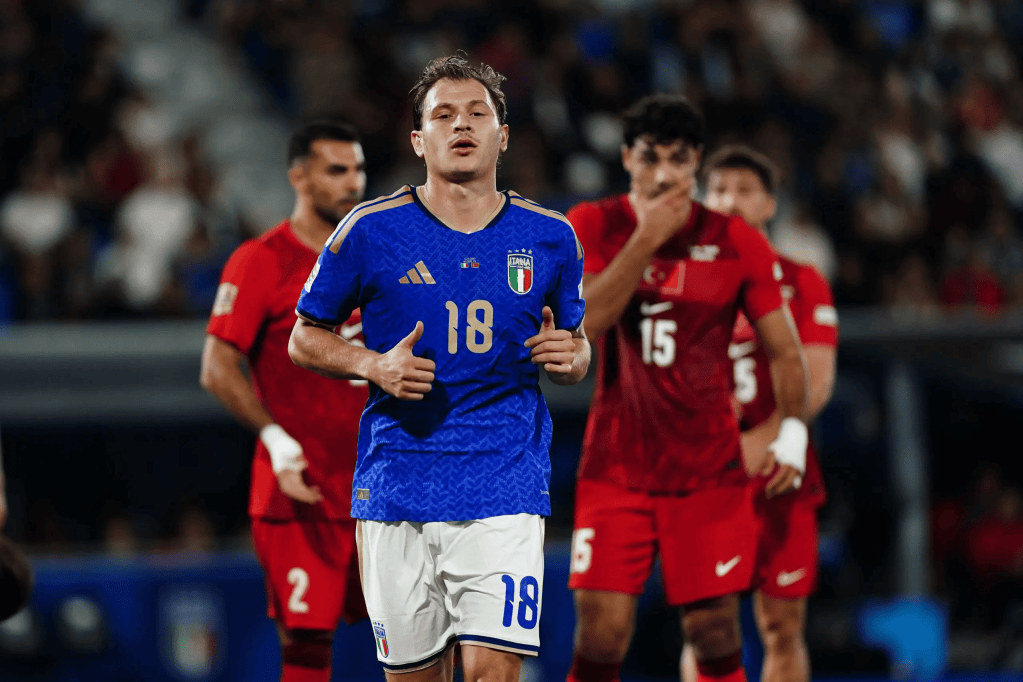
| League A | A1 | France, Italy, Belgium, Türkiye |
| League A | A2 | Germany, Netherlands, Serbia, Greece |
| League A | A3 | Spain, Croatia, England, Czechia |
| League A | A4 | Portugal, Denmark, Norway, Wales |
| League B | B1 | Scotland, Switzerland, Slovenia, North Macedonia |
| League B | B2 | Hungary, Ukraine, Georgia, Northern Ireland |
| League B | B3 | Israel, Austria, Republic of Ireland, Kosovo |
| League B | B4 | Poland, Bosnia and Herzegovina, Romania, Sweden |
| League C | C1 | Albania, Finland, Belarus, San Marino |
| League C | C2 | Montenegro, Armenia, Cyprus, Latvia |
| League C | C3 | Kazakhstan, Slovakia, Faroe Islands, Moldova |
| League C | C4 | Iceland, Bulgaria, Estonia, Luxembourg |
| League D | D1 | Gibraltar, Malta, Andorra |
| League D | D2 | Lithuania, Azerbaijan, Liechtenstein |
UEFA Nations League fixtures and match schedule
The UEFA Nations League fixtures for the 2026/27 edition are spread across international match windows between September and November 2026. The league phase began on 24 September and concludes on 17 November 2026, with teams competing in home-and-away group matches. The League A quarter-finals and League A/B and B/C promotion or relegation play-offs are scheduled for 25–30 March 2027. The final tournament is scheduled for 9–13 June 2027.
Some of the leading participating nations include Spain, Portugal, France, Italy, England, Germany and the Netherlands. The 2026/27 draw placed Spain, Croatia, England and Czechia in League A Group A3, while Portugal, Denmark, Norway and Wales were drawn in Group A4. Group allocations change between editions through the competition’s promotion and relegation system. Check UEFA Nations League fixtures on SportPesa Score for opponents, match dates and kick-off times. Adults can also explore available football markets on SportPesa Tanzania when relevant; bet responsibly.
Also read: Romania vs Sweden UEFA Nations League: Live Score, H2H and Line-ups
UEFA Nations League results and live scores
You can track UEFA Nations League results to monitor your favourite national teams’ performances throughout the competition. Match results determine each team’s position in its group and influence qualification for the quarter-finals, promotion or relegation. Completed group fixtures also contribute to the final standings used to determine the next stage of the tournament. For recently completed football matches, check live scores and results on SportPesa Score and the available competition listings.
UEFA Nations League standings and tables
The UEFA Nations League standings show how participating teams perform in their respective groups. Each group table includes matches played, wins, draws, defeats, goals scored, goals conceded, goal difference, and points. Teams earn three points for a win, one for a draw and none for a defeat, with UEFA’s competition regulations determining how teams level on points are ranked. The standings determine which teams progress to the knockout stage or qualify for promotion and relegation arrangements.
UEFA Nations League knockout stage and finals
The knockout stage determines which country becomes the overall UEFA Nations League champion. In the 2026/27 edition, the top two teams from each League A group qualify for the quarter-finals, producing eight knockout-stage participants. The quarter-finals are played over two legs, with the four winners progressing to the final tournament. These four teams compete in two semi-finals before the third-place match and final. The winning country is crowned champion, with the 2026/27 final tournament scheduled for June 2027.
UEFA Nations League winners and previous champions
The first UEFA Nations League edition began in 2018, with Portugal winning the inaugural title in 2019. Since then, four completed editions have produced three different champion nations: Portugal, France and Spain. Portugal holds the record with two titles, becoming the first country to achieve this milestone after defeating Spain 5–3 on penalties in the 2025 final following a 2–2 draw.
| Edition | Winner | Runner-up |
| 2018/19 | Portugal | Netherlands |
| 2020/21 | France | Spain |
| 2022/23 | Spain | Croatia |
| 2024/25 | Portugal | Spain |
Also read: France National Football Team: Fixtures, Results, Squad and Latest News
Frequently asked questions about the UEFA Nations League
What is the UEFA Nations League?
The UEFA Nations League is an international football competition involving European men’s national teams. It uses a league format with group matches, promotion, relegation and a championship knockout stage.
How often is the UEFA Nations League played?
The competition is held every two years.
How do promotion and relegation work?
Promotion and relegation are determined by group positions and applicable play-off results. The 2026/27 edition has special arrangements ahead of the transition to three leagues in 2028/29.
Who has won the most UEFA Nations League titles?
Portugal holds the record with two UEFA Nations League titles, won in 2019 and 2025.
Where can fans find UEFA Nations League standings?
Fans can find updated group standings, points and team rankings on UEFA’s official Nations League website.
How many teams participate in the UEFA Nations League?
The 2026/27 UEFA Nations League features 54 national teams divided into four leagues.
Conclusion
The UEFA Nations League has increased opportunities for European national teams to compete in meaningful international football matches. Its league format allows teams to challenge for promotion, compete in relegation play-offs and pursue the championship title. The 2026/27 edition continues with four divisions before the competition moves towards a three-league structure. Follow UEFA Nations League fixtures, results and standings on SportPesa Score and keep up with each match as the action unfolds.
Read also: UEFA Champions League Results, Fixtures and Table
